Smoke Detection in High Ceiling Applications Using ASD
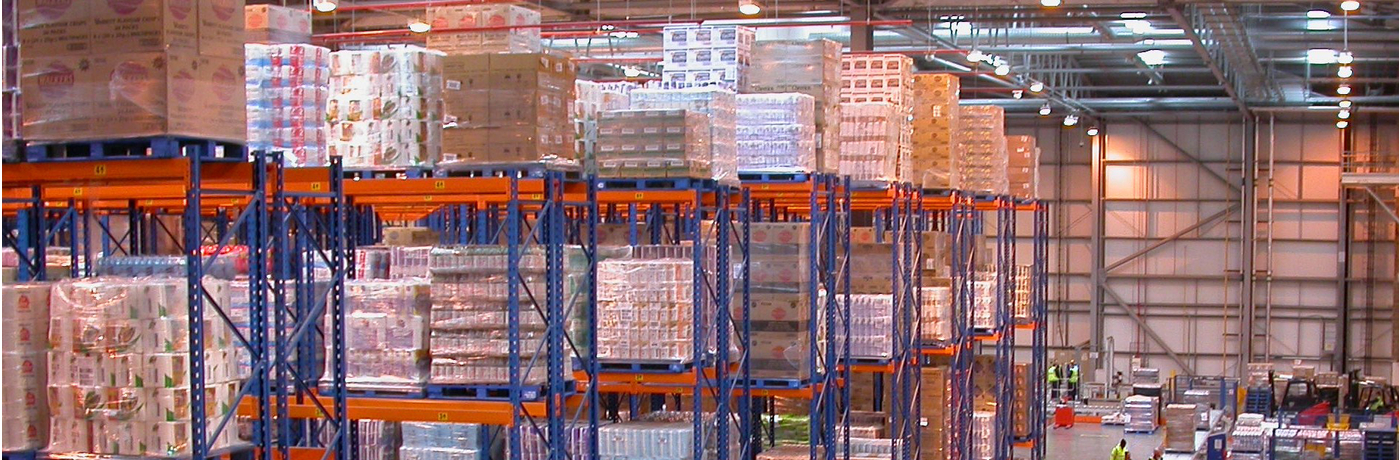
As a result designers and installers tend to use detection technologies such as beam detection and aspirating smoke detection (ASD) where smoke measurements over an area, rather than from a single location, are determined. Independent tests have shown that ASD has a far higher sensitivity to smoke than point detector technology, resulting in a superior ability to detect smoke that is diluted or distributed as it rises to higher levels.

Servicing Fire Detection Systems in Areas of Difficult Access
What do applications such as void spaces, lift shafts, high atriums, warehouses and secure areas all have in common? The answer, is inaccessibility. Maintenance and servicing of fire detection systems is not always given due consideration when the design and positioning of detection devices within a building is finalised and therefore fire detection testing in inaccessible areas can often be overlooked.
Using ASD for Coincidence & Redundancy Detection
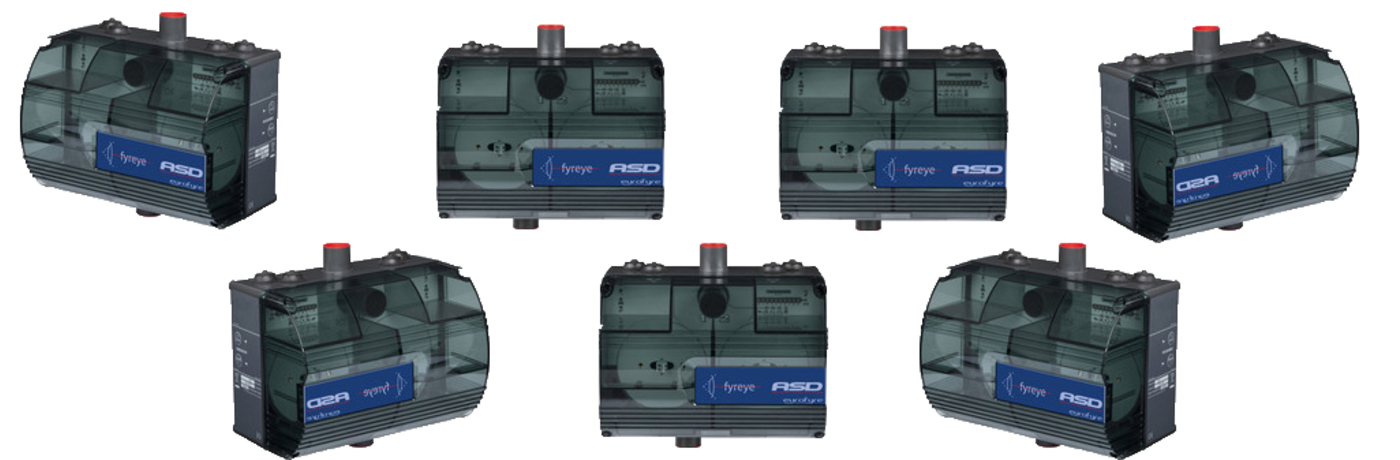
Commonly known as “double knock”. Coincidence detection relies on alarm signals across two zones or between two detectors to activate before any evacuation/alarm occurs. In this instance, depending on the ASD specification, a detector or each pipe inlet can be used as a zone/address. Look at the table below to see which detectors can be used as a single zone or multiple zones/address.

Addressable Aspirating Smoke Detection for Data Centres
usually consist of a large group of computer servers networked together, their main purpose being to provide companies and organizations internationally with remote/cloud storage, processing and distribution of large amounts of data.

Automatic Maintenance for Aspirating Smoke Detection
Aspirating smoke detection is generally considered to be a low maintenance system in applications where there is minimal dust and dirt pollution such as an office, but what about applications such as, steel work factories, livestock facilities and mines?