Churches and cathedrals are among the most historically and culturally significant buildings in the UK. Alongside their primary role as places of worship, they regularly host weddings, funerals, concerts, community events and visitors, and many also house irreplaceable artefacts, artwork, organs and archives.
Many of these buildings are centuries old, listed, and built with substantial amounts of timber within their roof structures, which means a fire can spread quickly and cause damage that cannot be undone. As many churches also remain unoccupied for long periods, reliable early fire detection is essential to safeguard historic building fabric and contents, and allow the fire and rescue service to respond before a fire takes hold.
Risks
Churches and cathedrals face a number of fire risks, including:
- Naked Flames
- Candles, votive stands and incense are used regularly during services and private prayer, and can ignite nearby fabrics, flowers or decorations if left unattended.
- Ageing Electrical Installations
- Older wiring, lighting, heating systems and organ blowers can develop faults over time, creating ignition sources in areas that are rarely accessed or inspected.
- Restoration and Maintenance Work
- Hot works such as lead roof repairs, soldering and paint stripping can ignite concealed timber, with fires sometimes developing unnoticed after work has finished for the day.
- Arson
- Churches are often open to the public and left unattended for long periods, which can make them vulnerable to deliberate fire setting.
- Combustible Construction and Contents
- Timber roof structures, pews, panelling, textiles and paper records can all contribute to rapid fire spread once a fire has started.
Challenges
Designing a reliable fire detection system for churches and cathedrals presents several challenges, including:
- High Vaulted Ceilings
- Smoke may cool and stratify below the roof before reaching ceiling-mounted point detectors, delaying alarm activation.
- Heritage and Aesthetic Sensitivity
- Many churches are listed buildings where installations must minimise visual impact and fixings into historic fabric, making extensive cabling and large numbers of devices undesirable.
- Access for Maintenance
- Servicing detectors at height can require scaffolding or specialist access equipment, increasing costs and disrupting services and events.
- Environmental Conditions
- Sunlight through large windows, dust, candle smoke and temperature fluctuations in unheated spaces can affect detector performance and lead to unwanted alarms.
- Building Movement
- Older masonry and timber structures naturally move with seasonal changes in temperature and humidity, which can affect the alignment of beam-based detection systems.
Optical Beam Detection
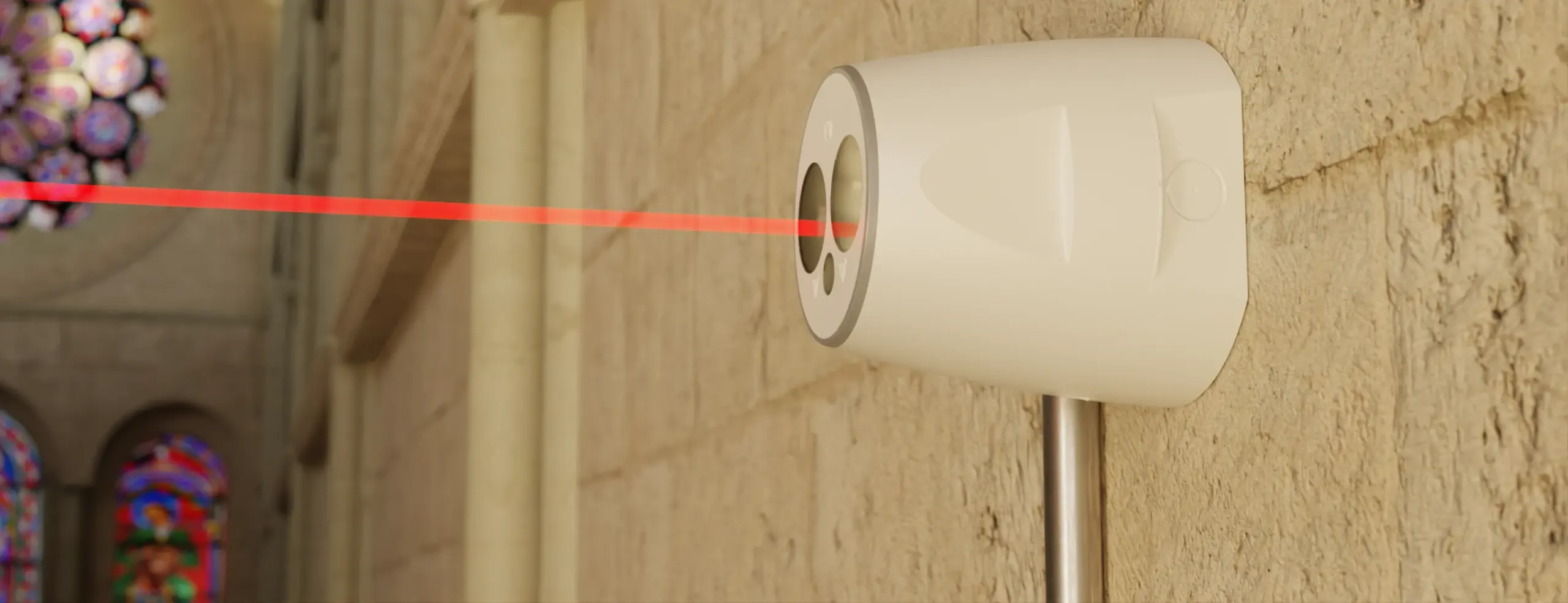
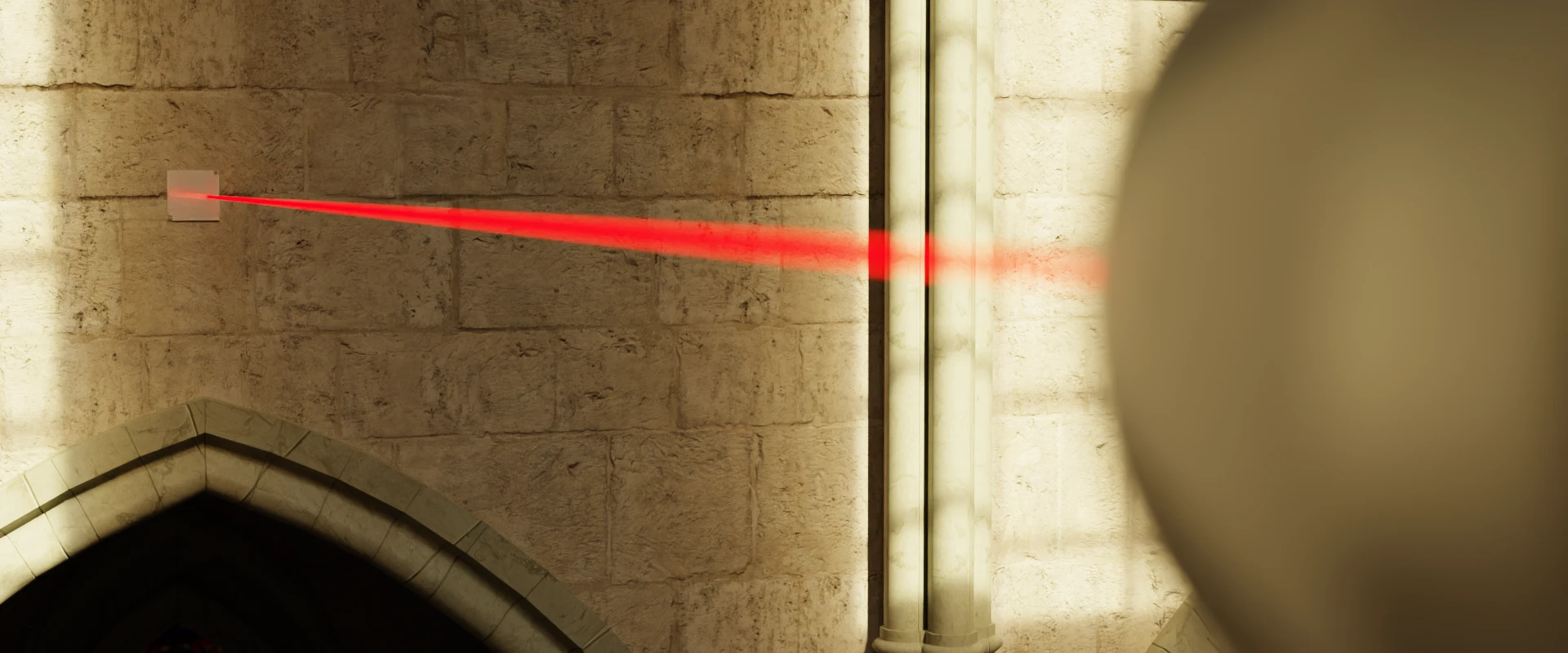
Optical beam smoke detection projects an infrared beam across an open space from a detector to a reflector, with the detector continuously monitoring the strength of the returned signal. When smoke enters the beam path, the particles scatter and absorb the light, reducing the signal received. Once this reduction reaches a predefined threshold, the detector signals an alarm.
A single beam can protect a long stretch of open space, so far fewer devices are needed than with point detection. As detectors and reflectors are mounted on walls rather than across ceilings, beam detection is well suited to churches and cathedrals, where high ceilings and heritage considerations can make conventional detection difficult to install and maintain.
FireRay Hub Reflective
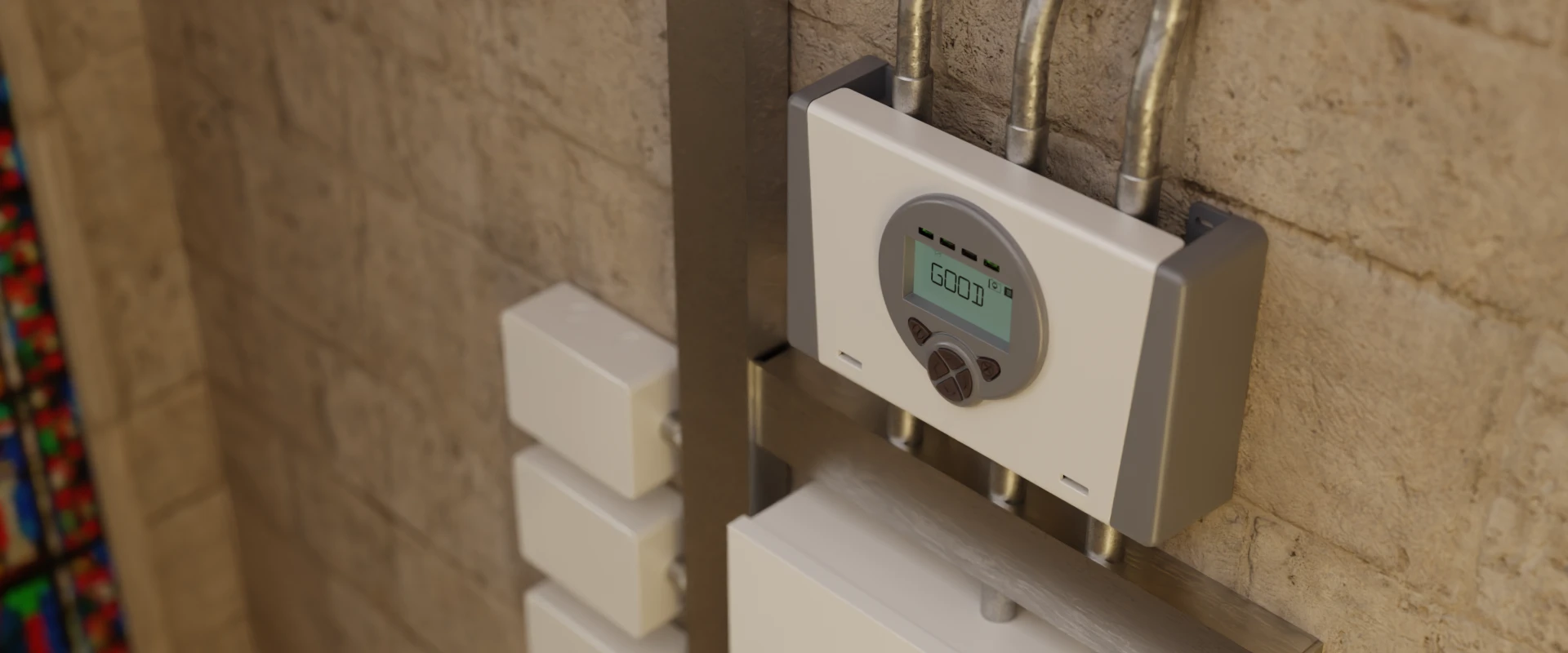
The FireRay Hub Reflective is an optical beam smoke detection platform designed for large and challenging spaces. It allows up to three detector heads to be operated from a single ground-level controller, from which alignment, configuration and testing can all be carried out without the need for access equipment.
Motorised Auto-Alignment™ technology enables the detector heads to align themselves with their reflectors automatically, while Building Movement Tracking™ continuously compensates for structural movement to maintain alignment over time. Light Cancellation Technology™ helps to reduce unwanted alarms caused by bright lighting or sunlight, which is particularly useful in churches with large windows.
Up to three detectors can be connected on a single cable run, reducing wiring requirements by up to 60% and installation time by approximately 25%, which helps to minimise disruption to historic interiors. Detection ranges can extend up to 120 metres using long-range reflector configurations, making the system suitable for long naves and larger cathedrals.

Approvals



Design Considerations
Control Panel Placement
The FireRay Hub Reflective controller should be installed at a ground-level location that engineers can access safely during commissioning, testing and maintenance, such as a vestry, side chapel or area near the main entrance. A discreet position that avoids principal areas of worship helps preserve the character of the interior, while keeping the controller away from public reach protects it from tampering and accidental damage.
Beam Detector Placement
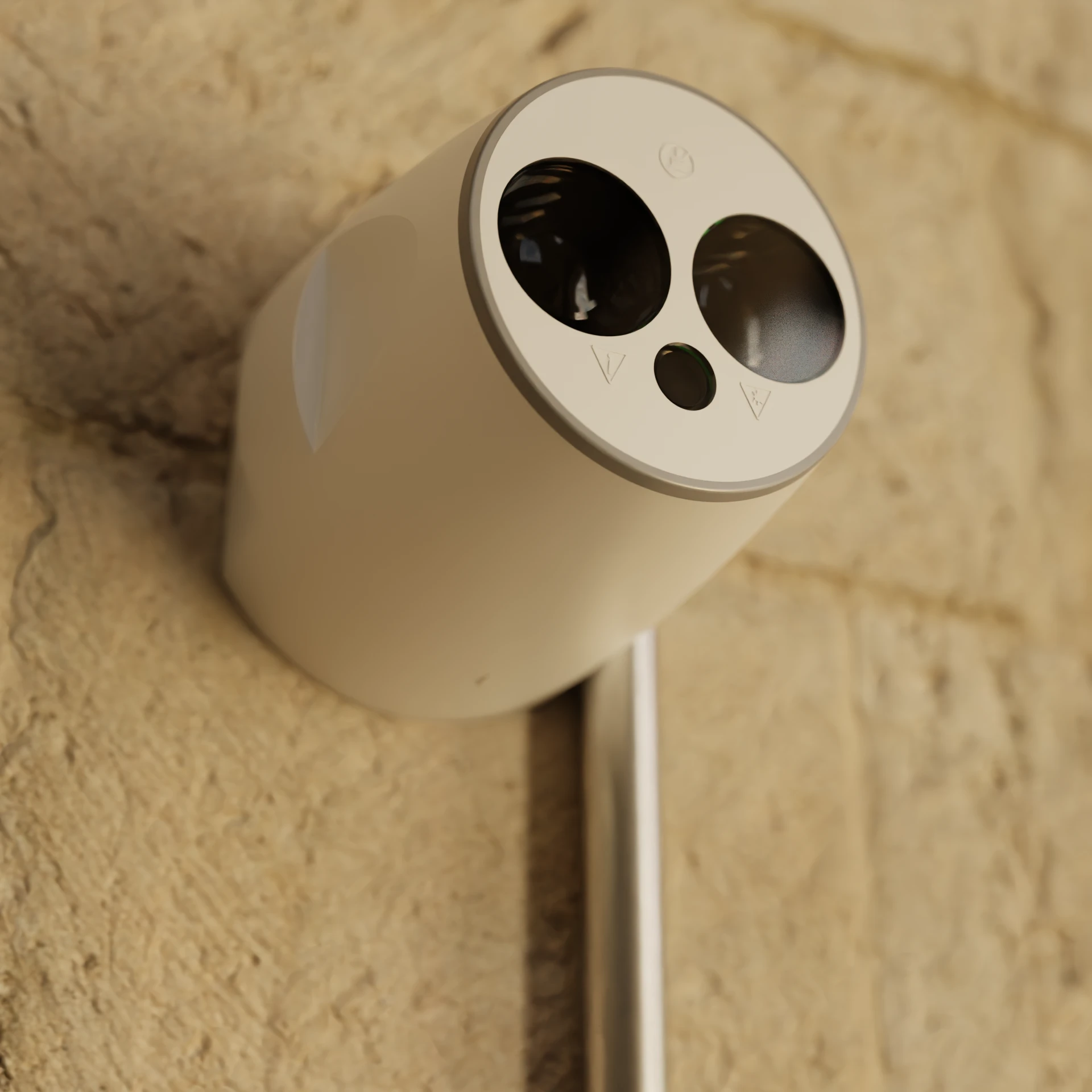
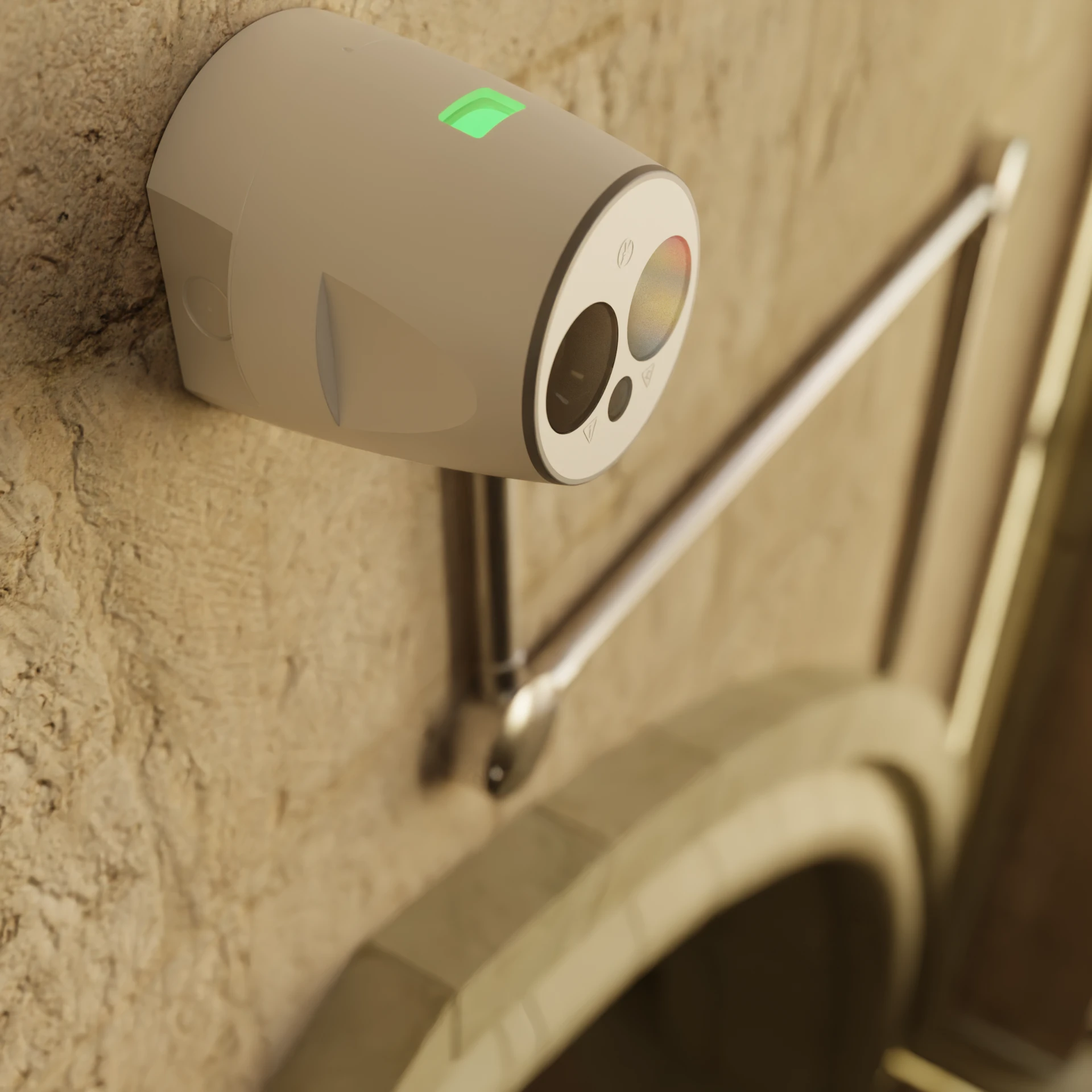
Beam detectors should be mounted at high level to intercept rising smoke, typically running along the length of the nave, aisles and transepts. Positions should account for roof geometry, the risk of smoke stratification beneath high ceilings, and any airflow from doors, windows or heating systems. Fixing detectors to solid masonry helps provide a stable mounting, and positioning should follow applicable standards and manufacturer guidance.
Reflector Placement
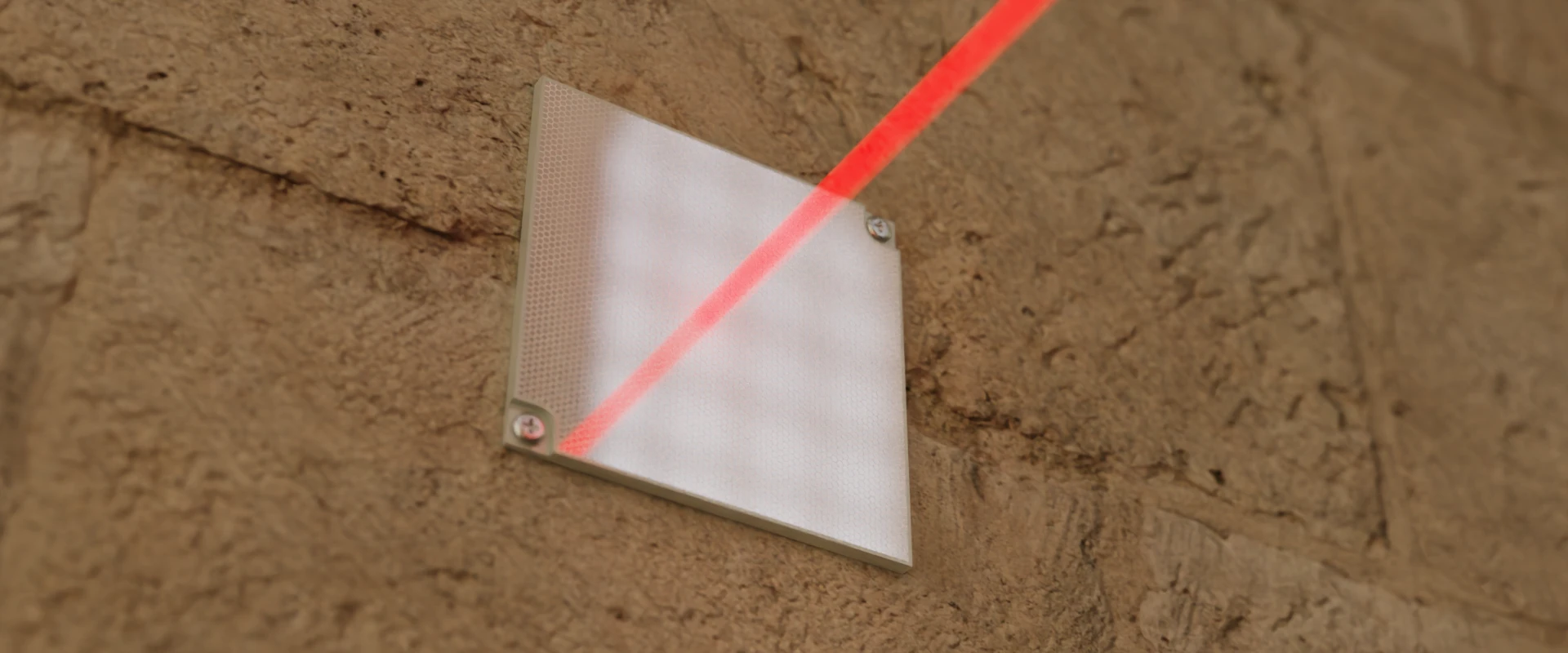
Reflectors should be mounted directly opposite their detector heads with a clear and unobstructed beam path, taking care to avoid chandeliers, hanging lamps, banners, screens and seasonal decorations. Long-range reflector kits may be required where distances exceed standard operating ranges, such as in larger cathedrals. The FireRay Hub Reflective’s Auto-Alignment™ and Building Movement Tracking™ features help maintain reliable performance as older structures move over time.
Why Choose Eurofyre?
- FFE Partner
- Eurofyre is a trusted FFE technical distributor, providing comprehensive beam detection solutions, expert guidance, training, and reliable support.
- Complete System Supplier
- Eurofyre is your one-stop shop for all fire detection needs. As a FFE recognised partner, we offer expert advice on everything relating to beam detection.
- Demonstration and Training
- We have a sophisticated training facility where we offer demonstrations and expert training on a range of systems, including a comprehensive selection of FireRay optical beam smoke detection systems.
- After-Sales Support
- Eurofyre prides itself on providing after-sales care and support that is second to none. We offer both on-site and telephone assistance to help you ensure that your system is fully operational and working at its best.
For more information about Optical Beam Smoke Detection, or to discuss any of the other products that Eurofyre have to offer, please feel free to get in touch either by phone on +44 (0) 1329 835 024, by email to [email protected] or via the online enquiry form situated on our contact page.
Don’t forget you can follow us on LinkedIn, and Instagram or sign up to our newsletter (in the footer below) to receive all the latest information from Eurofyre.