Wireless fire detection technology is becoming more and more prevalent, with many types of system now available on the market.
Currently, there is a wireless fire detection solution to suit almost any application, but what are the main types?
Commercial Wireless Fire Alarm Systems
Wireless fire alarms for commercial sites work in very much the same way as more traditional hardwired addressable fire detection systems. The main difference being that instead of transmitting signals to the main fire alarm control panel via wiring, they are transmitted over wireless frequencies.
Due to their cable-free nature, wireless fire alarms are often the preferred choice for heritage or protected buildings as there is no need for unsightly cables and no damage caused by cable installation. However, they are also well suited to larger applications such as schools and universities.
Wireless fire alarms can be installed much quicker than their wired counterparts and cause less disruption during installation due to the lack of cabling. However, these benefits do carry a price tag and wireless fire alarm systems are typically much more expensive.
Domestic Wireless Fire Alarm Systems
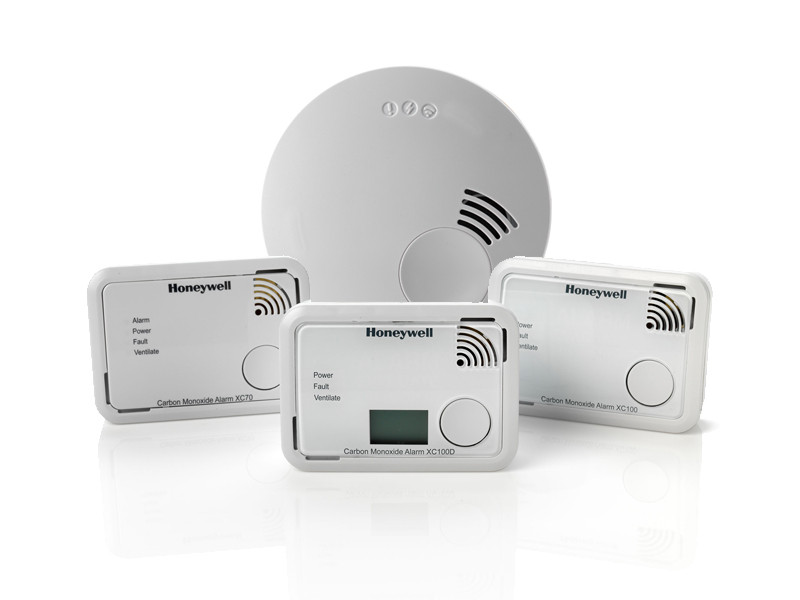
More recently, domestic fire alarms used in homes and by professional landlords are also now available with a wireless option. However, rather than connecting to a control panel, these fire or gas detection devices interconnect wirelessly to each other. When one device detects an issue, all of the connected alarms will sound, providing an advanced warning as well as more time to investigate the alarm or evacuate the building.
Check out Honeywell’s X-Series Range of Domestic Fire Detection
Temporary Wireless Fire Alarm Systems
Temporary wireless fire alarm systems are often found on construction sites and typically consist of standalone fire alarm stations placed around the site. Each station has a manual call point that is directly linked to a flashing siren, as well as extinguishers to help tackle a fire.
In many cases, these stations can be wirelessly interconnected via a dedicated control panel. Once one of the alarms is activated, a signal is sent to all of the connected devices, instructing them to sound the alarm.
The control panel also provides basic controls, such as identifying the location of the alarm that has been triggered or resetting the alarm once it has been dealt with.
Hybrid Wireless Technology
Hybrid fire alarm systems, such as Wi-Fyre, allow wireless technology to work together with new or existing hardwired technology. This means that wireless devices can be used where necessary, whether it is to extend or add devices to an existing fire alarm system, or as part of an entirely new system.
Hybrid detection technology allows devices to be added to any system with little disruption and without the need to run new cabling. Wireless devices can simply be added to areas where running cables is either impractical, will affect the integrity of a building or will cause disruption to the aesthetics.
Perhaps most appealingly, hybrid technology provides any fire alarm installer with the flexibility to use wireless technology where they see fit while helping them to keep costs down by using hardwired devices where practical.
How Does Wi-Fyre Work?
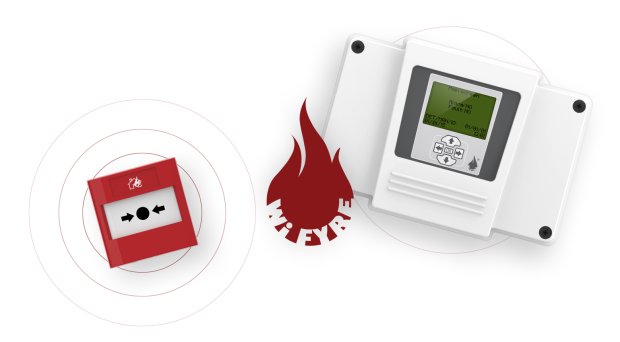
Wi-Fyre uses transponders connected into the fire alarm wiring to communicate with Wi-Fyre field devices. Each transponder can communicate with up to 30 mixed field devices such as heat and smoke detectors, sounders, input/output devices and manual call points.
A Wi-Fyre Wireless Survey Head is then used to ensure that the signal between the transponder and connected device is strong enough to provide effective and reliable detection.
Wi-Fyre is easy to use, easy to install and commission, and extremely cost-effective.
If you would like to discuss how you can use Wi-Fyre to benefit your fire alarm system, please feel free to give us a call on +44 (0)1329 835024 or email [email protected] where we would be happy to answer any questions.
Don’t forget you can follow us on LinkedIn, Twitter, Facebook and Google+ or sign up to our newsletter (in the footer below) to receive all the latest information from Eurofyre.