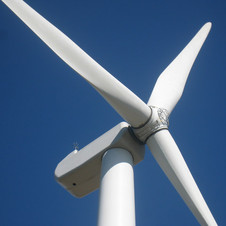
Aspiration Smoke Detection for Wind Turbine Applications
Wind turbines are becoming an increasingly important source of renewable energy. They play a valuable role in strategies established by numerous countries to reduce their dependency on non- renewable fossil fuels. In today’s ever developing world wind turbines are used for an array of applications such as providing power for charging batteries for boats and caravans, to larger scale applications providing domestic energy and contributing unused power back to the electrical grid. Collections of larger turbines, known as wind farms, also widely contribute to larger applications.

ASD Technology for Historical Sites & Museums
Historical sites, museums and religious buildings present unique challenges to the fire alarm system installer due to their cultural and architectural significance. In addition to bricks and mortar, these type of buildings often house priceless pieces of artwork and irreplaceable volumes whose loss or damage could be disastrous.
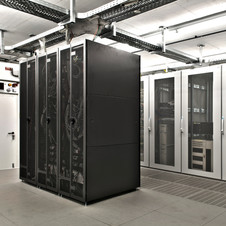
Very Early Warning Smoke Detection for Small Data Rooms
Now more than ever, data rooms are highly critical assets that need to be protected from the risk of fire. In an increasingly data-hungry climate, the load on data rooms is growing; there is more data to be stored than ever before and many organisations depend on sensitive IT infrastructure for the business-critical processes they are expected to perform.
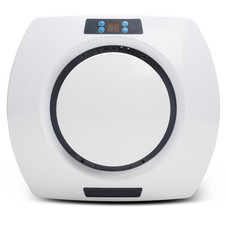
The ICAM ILQ Aspirating Smoke Detector
The ICAM ILQ Aspirating Smoke Detector is a practical solution for small area applications. Suitable for both high and normal sensitivity applications, its stand-alone functionality, out-of-the-box operation and simplified pipe network give the ICAM ILQ multiple advantages when it comes to installation.
Aspirating Smoke Detection Sampling Types
The use of aspirating smoke detection has significantly increased since its introduction and now provides the key to solving a vast range of fire detection obstacles.