Airport hangars are large enclosed structures designed to house aircraft for storage, maintenance, inspection and repair activities. They protect aircraft from environmental conditions and provide controlled spaces where engineers can carry out servicing and operational work safely. Modern hangars can accommodate anything from small private aircraft to large passenger jets and military aircraft.
Because of their scale and use, hangars present unique fire safety challenges. Aircraft fuel, hydraulic fluids, lubricants, electrical equipment and maintenance activities can all increase fire risk. Even a relatively small fire incident can spread quickly within such large open spaces, potentially causing extensive damage, operational disruption and risks to personnel.
Traditional point smoke detectors often struggle to provide effective coverage in these environments because of high ceilings and the vast areas involved. Effective fire detection systems must provide early warning while maintaining reliable performance across the entire protected space. Optical beam detection has become an effective solution for these challenging applications.
Risks
There are a number of fire risks associated with airport hangars. Some of these include:
- Flammable Materials
- Aircraft fuel, oils, hydraulic fluids and cleaning chemicals can increase the potential for rapid fire development.
- Electrical Equipment Failures
- Power distribution systems, charging equipment and maintenance tools can create ignition risks if faults occur.
- Maintenance Activities
- Welding, cutting, grinding and repair work can generate sparks and heat sources.
- Delayed Detection
- Smoke in large high-ceiling environments may take longer to reach conventional detectors.
- Operational Disruption
- Fire incidents can affect aircraft availability, maintenance schedules and airport operations.
Challenges
When designing a reliable fire detection solution for airport hangars, there are a number of challenges to overcome. Some of these include:
- Hangars often cover thousands of square metres, making complete coverage difficult using conventional point detection.
- High Ceilings
- Smoke may stratify before reaching ceiling-mounted detectors, delaying alarm activation.
- Access for Maintenance
- Routine servicing at height can require specialist access equipment and increase costs.
- Environmental Conditions
- Dust, sunlight and changing temperature conditions can affect detector performance.
- Building Movement
- Large structures naturally expand and contract with environmental changes, potentially affecting detector alignment.
Optical Beam Detection
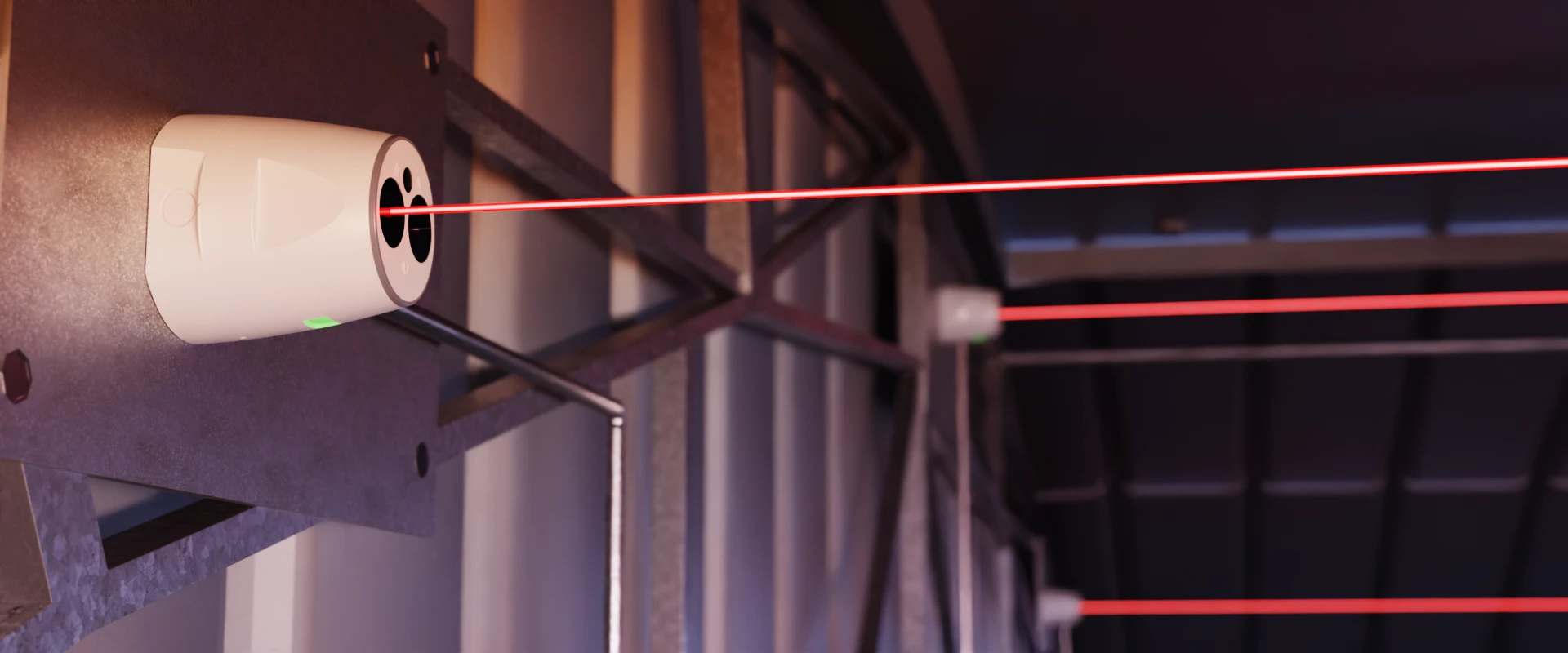
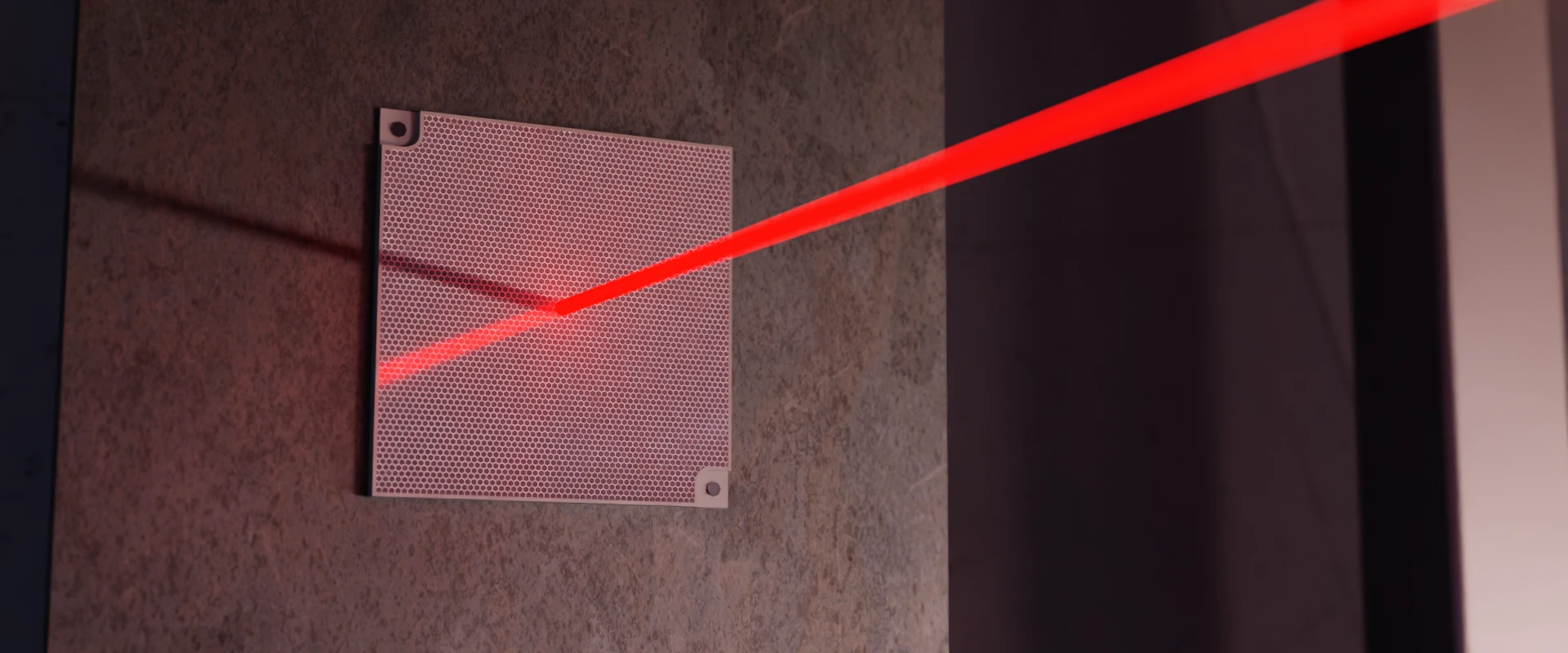
Optical beam smoke detection uses an infrared beam projected across an open area between a detector and a reflector. Under normal conditions, the detector continuously monitors the strength of the returned beam signal. When smoke enters the beam path, particles scatter and reduce the beam intensity. Once this reduction reaches a predefined threshold, the system triggers an alarm condition.
Unlike point detectors that monitor a small localised area, beam detectors provide wide-area coverage across long distances. This makes them particularly suitable for large spaces such as airport hangars where ceiling heights and open floor areas can make conventional detection difficult.
Beam systems can also reduce the number of devices required while providing earlier and more uniform smoke detection across large spaces.
FireRay Hub Reflective
The FireRay Hub Reflective is an advanced optical beam smoke detection platform designed specifically for demanding large-space applications. It combines reflective beam technology with centralised control, allowing up to three detector heads to operate from a single ground-level controller.
For airport hangars, this provides significant advantages. Traditional beam systems can require extensive high-level access for commissioning and maintenance. The FireRay Hub Reflective addresses this by allowing alignment, configuration and testing to be completed from a safe ground-level location.
The system incorporates motorised Auto-Alignment™ technology, enabling detector heads to automatically align themselves with the reflector. Building Movement Tracking™ continuously compensates for structural movement, maintaining alignment over time. Light Cancellation Technology™ helps reduce nuisance alarms caused by bright lighting or sunlight entering the building.
Up to three detectors can be connected on a single cable run, reducing wiring requirements by up to 60% and reducing installation time by approximately 25%. Detection ranges can extend up to 120 metres using long-range reflector configurations, making the system well suited to large aviation environments.

Approvals



Design Considerations
Control Panel Placement
The FireRay Hub Reflective controller should be positioned at a convenient ground-level location where engineers can safely access it during commissioning and maintenance activities. Positioning the controller close to access routes or maintenance areas can simplify testing and reduce disruption.
The location should also provide clear visibility and easy access for routine inspection while remaining protected from accidental damage.

Beam Detector Placement

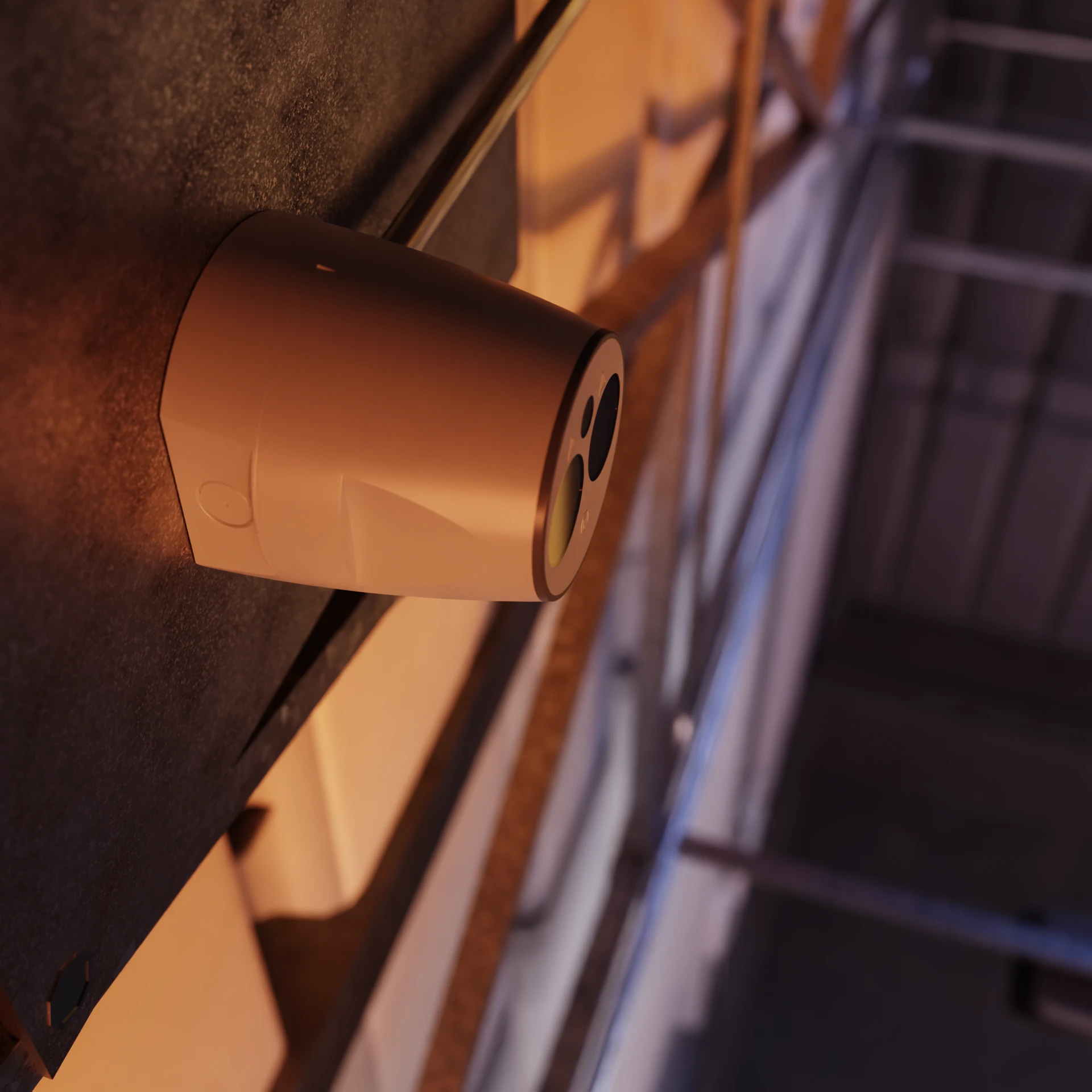
Beam detectors should be installed at high level to maximise smoke interception across the protected area. Detector locations should account for roof geometry, structural elements and airflow patterns within the hangar.
Because smoke movement in hangars can vary significantly depending on ventilation and ceiling height, beam positioning should follow applicable standards and manufacturer guidance.
Reflector Placement

Reflectors should be mounted directly opposite detector heads with a clear and unobstructed beam path. Correct positioning is essential for reliable operation and accurate alignment.
In large hangars, long-range reflector kits may be required where distances exceed standard operating ranges. Reflectors should also be positioned to minimise the effects of vibration and environmental movement.
The FireRay Hub Reflective’s motorised alignment and Building Movement Tracking™ features help maintain optimum performance after installation.
Why Choose Eurofyre?
- FFE Partner
- Eurofyre is a trusted FFE technical distributor, providing comprehensive beam detection solutions, expert guidance, training, and reliable support.
- Complete System Supplier
- Eurofyre is your one-stop shop for all fire detection needs. As a FFE recognised partner, we offer expert advice on everything relating to beam detection.
- Demonstration and Training
- We have a sophisticated training facility where we offer demonstrations and expert training on a range of systems, including a comprehensive selection of FireRay optical beam smoke detection systems.
- After-Sales Support
- Eurofyre prides itself on providing after-sales care and support that is second to none. We offer both on-site and telephone assistance to help you ensure that your system is fully operational and working at its best.
For more information about Optical Beam Smoke Detection, or to discuss any of the other products that Eurofyre have to offer, please feel free to get in touch either by phone on +44 (0) 1329 835 024, by email to [email protected] or via the online enquiry form situated on our contact page.
Don’t forget you can follow us on LinkedIn, and Instagram or sign up to our newsletter (in the footer below) to receive all the latest information from Eurofyre.