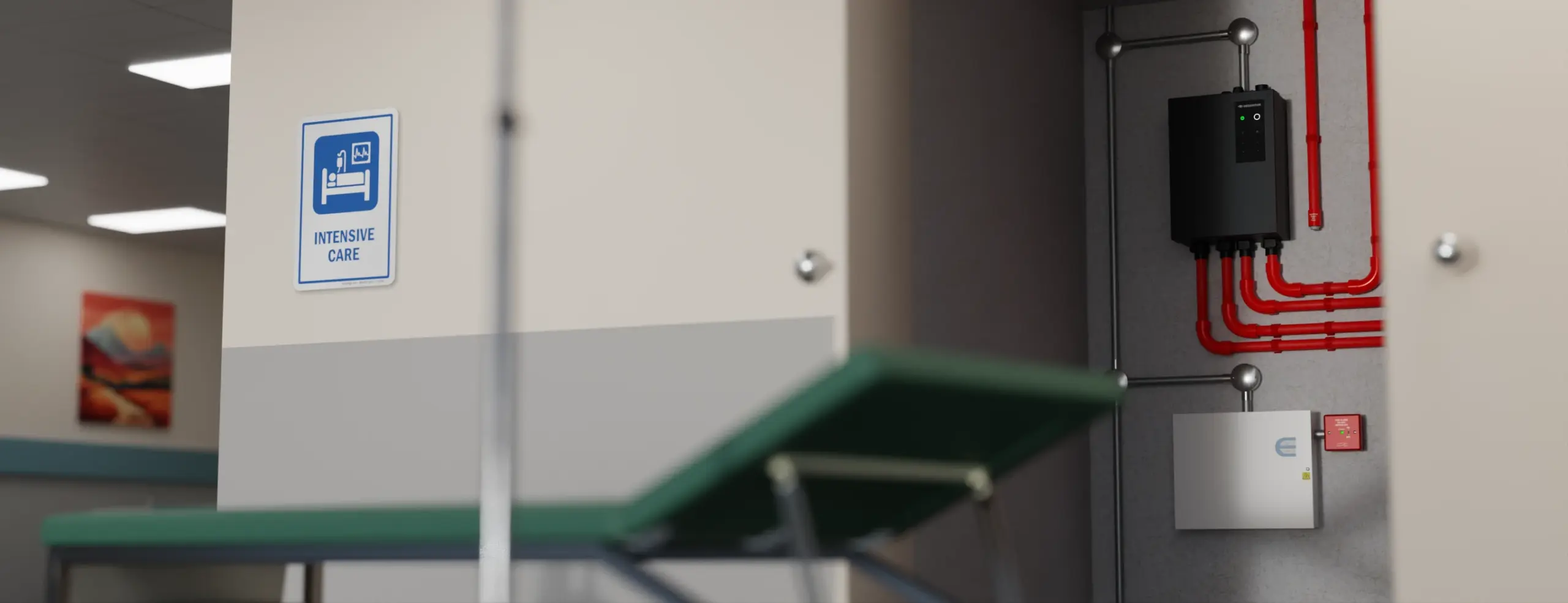
In June last year we published an article to introduce the types of aspirating smoke detection that are available. During the article we outlined five different approaches to aspirating smoke detection: primary sampling, secondary sampling, localised sampling, in-cabinet sampling and duct sampling, before going on to introduce primary and secondary sampling in more detail. For this article, we want to pick up where we left off and talk about the remaining three types of sampling in further detail; localised air sampling, in-cabinet air sampling and duct air sampling.
Localised Air Sampling
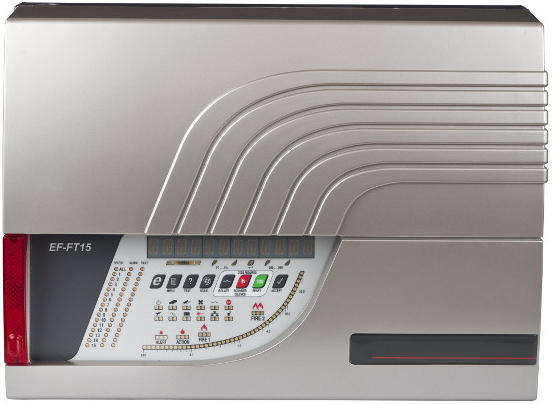
Localised Sampling is used to monitor specific pieces of equipment. Pipe work and sampling points are located and setup up specifically to watch over equipment within an open area. Although the sensitivity of such systems can only be defined during the full specification design it is common that the risk will advocate the use of an enhanced class B system or a very high sensitivity class A system, such as the EF-FT15 from Eurofyre.
In-cabinet Air Sampling
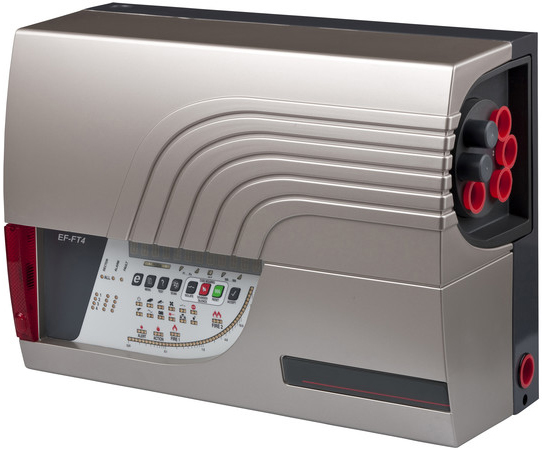
Not dissimilar to localised air sampling, in-cabinet air sampling is used to target specific pieces of equipment. However, in this circumstance pipework and sampling points are setup to target specific pieces of equipment housed in individual cabinets where the protected volume is small, usually self-contained and has some unique challenges and risks affiliated with the cooling of critical electronic and electrical equipment.
Specific performance tests should be carried out during the commissioning and maintenance of an in-cabinet air sampling system, however, it is broadly considered that an enhanced class B or very high sensitivity system such as the EF-FT4 aspirating smoke detector should be used.
Duct Air Sampling
There are two main approaches when it comes to using aspirating smoke detection to sample air from within a duct:
- Duct Smoke Detection
Duct Smoke Detection, or DSD, is provided to prompt a control system to shut down the duct system and prevent smoke from being transported through the building. - Duct Sampling Applications
This is when the detection of smoke is used to provide an early warning of fire when smoke is present in a duct that is extracting air from a particular area.
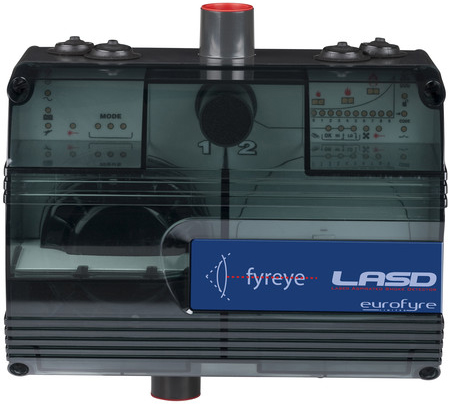
In both cases the use of a higher sensitivity detection is made possible by using an aspirating smoke detection system. ASD is often recommended as a substitute for passive type duct detectors as it uses its own internal aspirator or fan and is not dependant on the air flow of the duct. In this circumstance the sensitivity of the smoke detector can be similar to that of point detectors although sensitivity must be increased for larger areas or increased duct airflow. For this type of application a system such as the EF-LASD1 is recommended.
For more information on aspirating smoke detection or to discuss any of the products that we have to offer please feel free to get in touch either by phone on +44 (0) 1329 835 024, email to [email protected] or via the online enquiry form situated on our contact page.
Don’t forget you can follow us on LinkedIn, Twitter, Facebook, Google+ or sign up to our newsletter (in the footer below) to receive all the latest information from Eurofyre.